How to Create Personalized Student Experiences Without Breaking the Bank
- Education, Personalised Student Experiences
- Posted: 11 months ago
Higher education institutions face mounting pressure to deliver personalized student experiences while managing tight budgets. Students expect Amazon-level service: Immediate responses, relevant information, and support tailored to their specific needs. Yet many institutions struggle to meet these expectations with limited resources and legacy systems.
The good news? Personalization doesn’t require a complete technology overhaul or massive budget increases. Strategic approaches using existing data and smart automation can transform how institutions engage with students while keeping costs manageable.
The Personalization Opportunity
Today’s students interact with institutions across multiple touchpoints: admissions, registration, financial aid, academic support, and career services. Each interaction presents an opportunity to deliver relevant, timely information that moves students forward in their journey.
However, most institutions default to one-size-fits-all communication. Mass emails go to all students regardless of their program, year, or specific needs. Support staff repeat the same information across hundreds of similar inquiries. Students receive generic responses that don’t address their unique circumstances.
This approach creates friction, frustration, and missed opportunities for meaningful student engagement.
Approach #1: Segmented Communication Strategies
Most institutions sit on goldmines of student data, but use it like they’re still operating with paper filing cabinets. Student information systems contain program details, enrollment status, financial aid information, and engagement history, everything needed to create targeted communications.
The magic happens when you stop sending identical messages to completely different student populations. Why would a part-time evening student receive the same campus events newsletter as residential undergraduates?
The foundation of cost-effective personalization lies in intelligent segmentation. Instead of sending identical messages to all students, institutions can create targeted communications based on existing data points.
Start with what you already know:
- Academic program and year of study
- Enrollment status and registration patterns
- Financial aid status
- Geographic location
- Engagement history with services
Use this information strategically.
First-year students get orientation-focused content while seniors receive career development resources. Students with completed financial aid applications stop getting urgent deadline reminders, while those who haven’t started the process receive targeted guidance with clear next steps.
This segmentation approach leverages existing student information systems without requiring new data collection or expensive personalization engines. The result? Students start trusting that communications from your institution actually contain the information they need.

Approach #2: Preference-Based Information Delivery
Here’s an uncomfortable truth: students ignore most institutional communications because they’ve learned that most of it doesn’t apply to them. They develop communication fatigue and stop paying attention entirely, which means they miss the messages that actually matter.
Students tell institutions exactly how they want to receive information through their behaviour. Some immediately respond to emails with detailed follow-up questions. They want comprehensive information delivered digitally. Others never read emails but respond instantly to text messages. Still others bypass all communication channels and head straight to your website when they need answers.
Implement preference capture through:
- Registration forms that ask about communication preferences
- Opt-in selections during orientation processes
- Feedback collection after support interactions
- Analysis of response patterns across channels
Smart institutions adapt accordingly.
Instead of forcing all students through identical communication funnels, they create multiple pathways that match how students actually consume information. Students receive information in formats they actually use, engagement rates improve, and important messages stop getting lost in the noise.
Technology can make personalization more accessible. Platforms like EduBot can help deliver personalized experiences by integrating with existing systems and providing consistent interactions across channels.
Approach #3: Adaptive Support Resources
Traditional support models put the burden on students to navigate institutional complexity. Students must figure out which office handles their specific issue, find the right contact information, and explain their situation to staff who may not have immediate access to their records.
Adaptive support flips this dynamic. Instead of making students hunt for relevant resources, institutions proactively deliver contextual help based on what students are actually doing.
Create adaptive experiences through:
- Displaying dynamic content based on student profile and current status
- Triggering proactive outreach for specific events or deadlines
- Providing contextual help during important tasks
- Recommending resources based on similar student success patterns
For example, when a student logs in to register for classes, they automatically see course recommendations based on their degree progress and prerequisite completion. Students approaching graduation receive career services information and alumni networking opportunities. Those with academic holds see clear resolution steps rather than generic policy information.
This transforms support from reactive problem-solving into proactive guidance that helps students succeed before issues become crises.
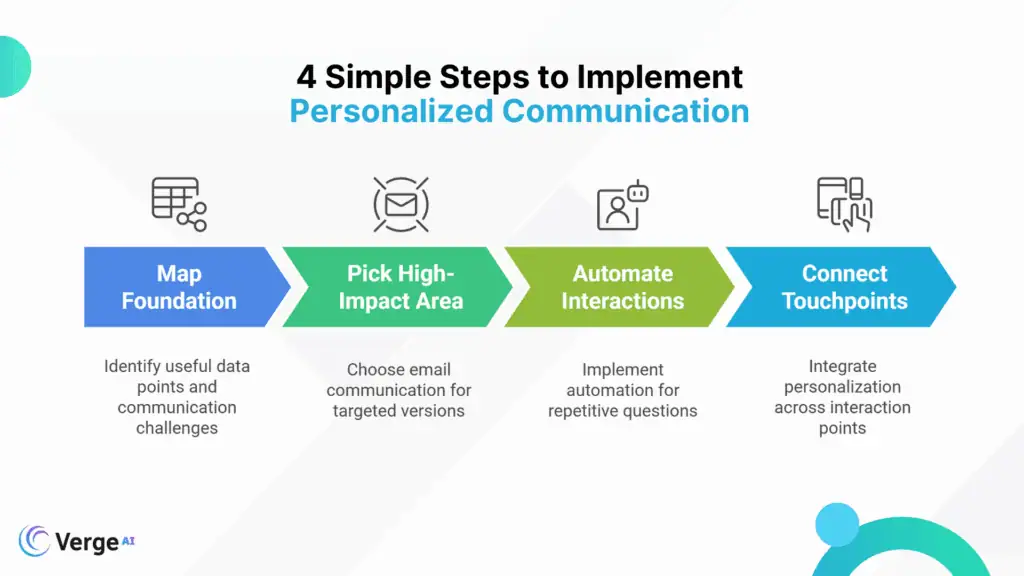
Simple Steps to Create Personalized Student Experiences
The biggest mistake institutions make with personalization is trying to transform everything simultaneously. Successful implementation starts with targeted improvements that demonstrate clear value.
Phase 1: Map your foundation
Most institutions already collect extensive student information, but use only a fraction of it. Identify your most useful data points and highest-impact communication challenges. Start there.
Phase 2: Pick one high-impact area
Email communication often provides the easiest starting point because results are easily measured. Choose your most important recurring communication (like registration reminders or financial aid updates) and create targeted versions based on student characteristics.
Phase 3: Automate repetitive interactions
If staff spend significant time answering identical questions, those interactions are prime candidates for smart automation. Students get immediate answers, staff focus on complex issues, and everyone benefits.
Phase 4: Connect across touchpoints
Once initial efforts show results, begin integrating personalization across different interaction points. Information collected during one student interaction should inform future communications and support experiences.
Measuring Personalization Impact
Personalisation efforts need clear metrics to justify continued investment and guide optimisation decisions. The good news is that improvements typically show up quickly in both engagement and operational efficiency measures.
Track engagement metrics:
- Email open and click-through rates by segment
- Response times for student inquiries
- Self-service resolution rates
- Student satisfaction scores
Monitor operational efficiency:
- Reduction in repetitive support tickets
- Staff time savings from automated responses
- Improved conversion rates for important processes
- Decreased time-to-resolution for student issues
Measure student outcomes:
- Improved retention rates
- Faster completion of administrative processes
- Higher utilisation of support services
- Enhanced overall student experience scores
Most importantly, measure student outcomes that matter to institutional success—retention rates, timely completion of important processes, and overall satisfaction with support experiences. These metrics demonstrate the broader value of personalization efforts beyond simple communication improvements.
Starting Your Personalization Journey
Creating personalized student experiences isn’t about implementing perfect solutions immediately. It’s about identifying where current approaches create unnecessary friction and systematically removing those barriers through smarter use of existing resources.
Begin with your current pain points. Where do students experience the most friction? What questions consume the most staff time? Which processes create the biggest barriers to student success?
The institutions seeing the strongest results focus on solving real problems rather than implementing impressive technology. They start small, measure carefully, and build on successes to create comprehensive personalized experiences that students value and budgets can sustain.
Talk With Our Team
Ready to explore how AI can help your institution deliver personalized student experiences without the complexity? Learn more about how EduBot integrates with your existing systems to provide 24/7 personalized support. Contact our team to discuss your specific challenges and see how other institutions are transforming their student experience.