6 Tips to Easily Integrate AI Solutions with University Systems
- Education
- Posted: 1 year ago
Let’s face it, the idea of integrating Artificial Intelligence (AI) into university systems can be both exciting and overwhelming. Universities are often stuck in limbo, wanting to embrace AI but unsure how to navigate the obstacles along the way.
The culprit? Outdated infrastructure, siloed data, and the daunting fear of system-wide chaos.
If you’re an IT leader staring at a 20-year-old student database or a CFO wary of budget overruns, this post is your blueprint. Let’s transform those clunky systems into agile, AI-powered engines—without the migraine.
#1: Audit Systems and Spot High-Impact AI Opportunities
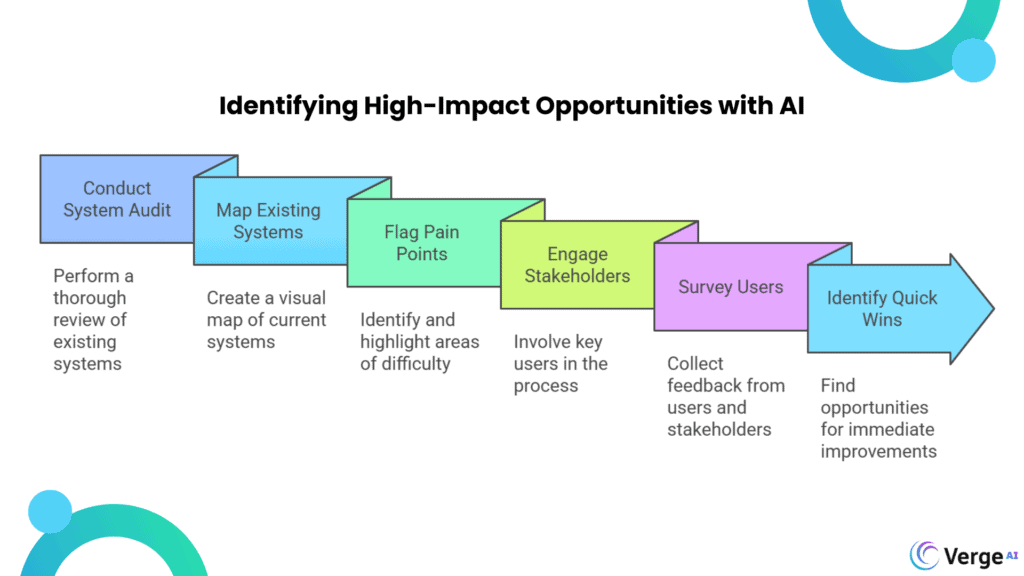
Before installing a single chatbot, conduct a ruthless system audit. Legacy systems often contain outdated software, fragmented databases, and workflows held together by Excel macros. The first step is to identify what you already have and where AI can make the most impact.
Actionable Tips:
- Map all existing systems (ERP, LMS, CRM) and flag pain points: Is the registrar’s office drowning in paperwork? Do professors spend 15 hours/week grading essays? Conduct a thorough needs assessment to pinpoint pain points and opportunities for improvement.
- Engage stakeholders from the get-go: Survey faculty, students, and IT staff. After all, they’re the ones who’ll be using these new tools.
Pro Insight: Start with “low-hanging fruit.” Automating financial aid inquiries or IT help desks delivers quick wins. Quick wins help in gaining stakeholder buy-in.
💡Key Takeaway: A clear understanding of your current systems and pain points is essential for identifying where AI can provide the most value.
# 2: Tackle Tech Debt with Phased Rollouts
Legacy systems weren’t built for machine learning models. Forcing them together is like trying to fit a square peg into a round hole. Rome wasn’t built in a day, and your AI integration shouldn’t be either. Instead, use a phased rollout approach to minimize disruptions.
Actionable Tips:
- Pilot AI in non-critical areas: Start small in one department before doing a full-scale rollout to your whole university. Test a chatbot for library queries before touching admissions.
- Backup Systems: Always have a contingency plan in place. This means having rollback procedures if something doesn’t go as planned.
- Adopt Microservices: Instead of overhauling entire systems, update modules individually by adopting a microservices architecture. For instance, update the course registration module independently of the grading system.
💡Key takeaway: Use phased rollouts instead of “big bang” integrations to minimize service disruptions.
#3: Embrace Cloud and API-Driven Flexibility
Legacy systems hate change. But cloud platforms and APIs are great mediators. Cloud-based solutions and API integrations offer the flexibility and scalability that on-premise software struggles to deliver.

Why It Works:
- Scalability: Need 50% more server space during enrollment? Cloud systems can easily scale and adjust to handle the increased demand.
- Cost Efficiency: There are no upfront hardware costs with cloud solutions. There are also much lower maintenance costs, which can help your institution use edtech to cut costs.
- APIs: APIs let your student database “talk” to modern AI tools. They are like the universal translators of the tech world and give your systems the ability to harmoniously talk to each other.
💡Key Takeaway: Cloud and API-driven solutions offer the flexibility and scalability needed for effective AI integration.
#4: Data Defense—Your AI’s Best Offense
Data is the life force of any AI system. Making sure you implement AI effectively involves managing your data well. But how do you do that?
Actionable Tips:
- Data Collection: Gather data from various sources such as student information systems, learning management systems, and even social media platforms.
- Data Cleaning and Preparation: Ensure your data is error-free, consistent, and structured. Cleaning data involves removing duplicate information, correcting errors, and structuring the data for AI algorithms.
- Data Infrastructure and Security: Use cloud-based platforms for scalable and flexible data management. Implement encryption, access controls, and regular audits to protect sensitive data.
💡Key Takeaway: Robust data management is crucial for the success of your AI initiatives.
#5: AI Training Programs for University Staff
Technology is only as good as the people who use it. Even the most advanced AI solutions will falter if the users aren’t onboard and well-trained.
Actionable Tips:
- Upskill and Reskill: Identify skill gaps among staff and invest in training sessions. These sessions should cover both the operational aspects of the AI tools and their broader benefits.
- Create Support Structures: Establish help desks and dedicated support teams. Online resources are also a good idea for continuous learning. Encouraging internal collaboration can demystify AI and encourage adoption.
- Measure Training Effectiveness: Use surveys and performance metrics to gauge how well the staff is adapting to the changes. Then adjust training modules accordingly.
💡Key Takeaway: Well-trained staff are essential for the successful implementation of AI solutions.
#6: Measure Success—Then Measure Again
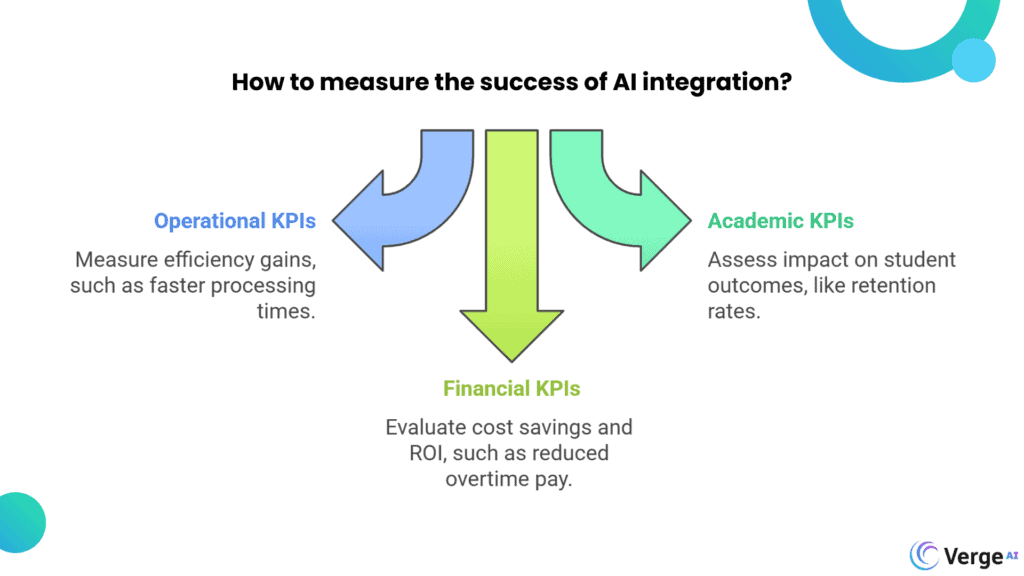
Did your AI project flop or flourish? Define KPIs upfront to measure the success of your AI integration:
- Operational: Time saved on administrative tasks (e.g., 50% faster transcript processing).
- Academic: Student retention rates, and assignment completion times.
- Financial: ROI from reduced overtime pay or cloud cost savings.
You should also regularly assess the impact the AI integration is having on your university:
- How are your new systems impacting teaching, learning outcomes, and administrative processes?
- Are the AI tools improving efficiency?
- Are they enhancing the learning experience for students?
Use data-driven insights to answer these questions and make necessary adjustments. Continuous evaluation ensures that your AI systems remain effective and aligned with your institutional goals.
Feedback Loops:
Another indicator of the success of your initiative is feedback from the people using the systems. After all, who better to tell you what’s working and what’s not than the people using the tool? Surveys and focus groups are a great way to gather this data.
Improve Iteratively:
AI is changing constantly. The way to combat this is to build a cyclical evaluation process that allows for iterative updates and refinements.
💡Key Takeaway: Continuous measurement and evaluation ensure that your AI systems remain effective and aligned with your institutional goals.
Future-Proof Your University—One Step at a Time
AI isn’t replacing your legacy systems—it’s reviving them. By starting small, securing data, and prioritizing staff buy-in, you’ll dodge the pitfalls that sink many successful AI integrations.
Next Steps to Integrate AI:
Ready to future-proof your campus with AI-driven student engagement? Let’s explore how AI can be a strategic investment for your institution. Contact Verge AI today or schedule a demo to see how our solutions can support your long-term institutional goals.